What Is CRM or CRM Definition? Simple 2026 Guide by Maximizer

Introduction to CRM (Customer Relationship Management) Software
CRM systems have become an essential tool for businesses looking to thrive in today’s competitive landscape. But what exactly is a CRM, and why is it so crucial? In this blog, we’ll explore, what is CRM, the fundamentals of CRM, breaking down how these systems work, their key features, and how they can transform the way you manage and nurture relationships with your customers. Whether you’re new to CRM or looking to deepen your understanding, this guide will offer valuable insights into maximizing your business’s potential through effective customer management.
What is CRM Definition or What is CRM (Customer Relationship Management)?
Answer to what is CRM or CRM definition is: CRM is a system or strategy businesses use to manage their interactions with current and potential customers. It helps companies stay connected to customers, streamline processes, and improve profitability.
A CRM tool is a software solution designed to help businesses manage interactions with current and potential customers. It centralizes customer data, streamlines communication, and automates key sales, marketing, and customer support processes. By organizing and analyzing customer information, a CRM tool enables businesses to build stronger relationships, improve customer satisfaction, and drive growth. Whether it’s tracking leads, managing customer inquiries, or analyzing sales trends, a CRM tool serves as the backbone for delivering personalized and efficient customer experiences.
What is a CRM in simple words?
To keep things simple, a CRM helps you stay on top of customer management, making it easy to nurture your relationship with your customers. This is especially useful as an organization scales up and your customer base grows, you then will need a modern & user-friendly tool like Maximizer to stay on top of growing demand.
What does CRM stand for?
CRM stands for ‘Customer Relationship Management’. It refers to a set of practices that businesses use to manage and analyze interactions with current and potential customers. The goal of CRM is to improve customer service relationships, assist in customer retention, and drive sales growth.
What does CRM stand for in business?
A CRM (Customer Relationship Management) system is typically a software platform that helps businesses collect, organize, and analyze customer data. This enables them to better understand their customers’ needs, personalize communication, and streamline operations across sales, marketing, and customer support. By centralizing this information, businesses can create more meaningful and effective interactions with their customers, ultimately fostering stronger relationships and increasing profitability.
What does a CRM system do?
We have seen What is CRM definition and also what is a CRM in simple words. Now let us look it what a CRM does?
A CRM system (Customer Relationship Management system) helps businesses manage interactions with current and potential customers. Its main goal is to improve relationships, streamline processes, and increase profitability.
Key Functions of a CRM System:
-
Contact Management
Stores customer information like names, emails, phone numbers, and history of interactions in one centralized database. -
Sales Management
Tracks sales opportunities, pipelines, and performance metrics to help close deals faster and more efficiently. -
Marketing Automation
Helps send targeted emails, run campaigns, and segment customers based on behaviors or preferences. -
Customer Service & Support
Logs customer issues, assigns support tickets, and tracks resolution progress to enhance service quality. -
Task & Workflow Automation
Automates repetitive tasks like follow-up emails, meeting reminders, or assigning leads to sales reps. -
Reporting & Analytics
Provides insights into sales performance, customer behavior, and marketing ROI through dashboards and custom reports. -
Integration with Other Tools
Connects with email platforms, e-commerce sites, accounting software, or customer service tools to unify business processes.
What’s an example of a CRM?
Maximizer is a fantastic example of a CRM system. Maximizer has been in operation for over 35 years and has supported over 120,000 large and small businesses worldwide in closing more deals. Maximizer allows users to configure and customize unique profile views—no development needed.
What is CRM Target Audience
A Customer Relationship Management (CRM) system is a powerful tool that helps businesses of all sizes and industries manage their interactions with customers more effectively. Whether you’re a small business owner, a sales professional, a marketer, a real estate agent or a financial advisor, a CRM system can optimize your processes, improve customer satisfaction, and ultimately boost your bottom line. Let’s explore how CRM can be tailored to meet the unique needs of different sectors.
What is a CRM for Financial Advisors?
In the fast-paced world of financial advising, managing client relationships is paramount. A robust Customer Relationship Management (CRM) system tailored for financial advisors can facilitate client interactions, enhance personalized service, and boost productivity. By integrating client data, tracking communication, and automating tasks, a CRM allows advisors to focus on what matters most—building trust and delivering tailored financial solutions. Whether you’re a solo advisor or part of a larger firm, the right CRM can be a game-changer in driving long-term client success and satisfaction.
What is CRM for Small Business
For small businesses, a CRM system is invaluable in helping manage customer interactions and track growth opportunities. It centralizes customer data, enabling businesses to stay organized and deliver personalized service without the need for a large team. By automating routine tasks and offering insights into customer behaviour, a CRM empowers small business owners to make informed decisions and compete more effectively in their market.
CRM in Sales
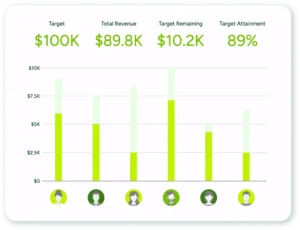
Sales professionals rely on CRM systems to stay on top of their game. A CRM helps sales teams manage their pipeline, set team targets, track leads, and close deals more efficiently by providing a clear overview of the entire sales process. With real-time data and automated follow-ups, sales reps can focus on what they do best—building relationships and driving revenue—while the CRM handles the administrative tasks.
CRM in Marketing
In the world of marketing, personalization and timing are key. A CRM system enables marketers to segment their audience, create targeted campaigns, and precisely monitor the results. Marketers can craft messages that resonate and drive engagement by understanding customer preferences and behaviours. The insights gained from CRM data allow for continuous optimization of marketing strategies, leading to higher conversion rates and better ROI.
CRM in Real Estate
When looking at real estate, client relationships are paramount, a CRM system serves as an essential tool for managing leads, nurturing prospects, and maintaining long-term relationships. Real estate professionals can use CRM to track property inquiries, schedule follow-ups, and keep detailed records of client interactions. By staying organized and responsive, agents can provide a superior customer experience, close deals faster, and build a strong referral network.
Getting started on your CRM journey?
Unlock your sales potential with a free Maximizer demo. Discover how to optimize lead management and build a powerful sales pipeline for your team.
What does a CRM system do?
At its core, a CRM system centralizes customer information, automates communication, and optimizes key business processes, such as sales, marketing, and customer service. A CRM system helps businesses build stronger relationships, improve customer satisfaction, and increase efficiency by providing a unified view of each customer.
What is a CRM program?
A CRM program refers to the overall strategy and approach a business takes to manage its customer relationships, often through the use of CRM software such as Maximizer. It encompasses the processes, practices, and tools a company implements to collect, organize, and analyze large amounts of customer data. It’s not just about the technology; it’s about how a business leverages that technology to achieve its customer relationship goals.
What is a CRM database?
A CRM database is the central repository where all customer-related information is stored. This database includes detailed records of customer interactions, such as emails, phone calls, purchase history, and support tickets. It also stores demographic information, preferences, and any other data that can help businesses understand and engage with their customers more effectively.
Benefits of CRM
A Customer Relationship Management (CRM) system offers a multitude of benefits that allow businesses to effectively nurture customer relationships on a large scale. By integrating various functions like sales, marketing, and customer service, a CRM system provides a holistic view of customer interactions, enabling businesses to deliver personalized experiences to a wide audience. Listed are the top Benefits of CRM Software which can help you to choose the best CRM without any conflict.
What is considered as a CRM?
When discussing Customer Relationship Management (CRM), it’s important to distinguish between tools specifically designed for CRM and other software that may have some overlapping functionalities. Not all tools that manage customer information or aid communication can be considered true CRM systems. Understanding what qualifies as a CRM is essential for businesses looking to invest in the right technology to manage customer relationships effectively. Below, we’ll explore whether some commonly used tools like Excel, Google products, Microsoft Outlook, Office 365 and SAP fit the definition of a CRM.
Is Excel a CRM tool?
While Excel is a powerful tool for data management and analysis, it is not a CRM system. Excel can be used to store and organize customer data, such as contact information and sales history, but it lacks the advanced features of a CRM system, like automation, real-time updates, and integrated communication tools. Excel also doesn’t provide the same level of scalability and collaboration that a dedicated CRM system offers. While small businesses might use Excel for basic customer management tasks, it is not a substitute for a true CRM tool that centralizes and automates customer interactions.
Is Google an example of CRM?
Google itself is not a CRM system, but it offers several tools, such as Google Contacts and Google Sheets, that can be used to manage customer information. However, these tools are not designed to function as comprehensive CRM systems. They lack features like sales pipeline management, automated workflows, and in-depth analytics that are standard in CRM software. While Google Workspace (formerly G Suite) can integrate with third-party CRM applications, it doesn’t offer a built-in CRM solution. Therefore, while Google provides useful tools for organization and communication, it does not serve as a standalone CRM.
Is Microsoft Outlook a CRM?
Microsoft Outlook is primarily an email client and personal information manager, not a CRM system. While Outlook is excellent for managing emails, calendars, and contacts, it doesn’t offer the broader functionality of a CRM system. However, Outlook can be integrated with CRM software, such as Maximizer, to provide a more comprehensive solution for managing customer relationships. On its own, Outlook cannot track sales opportunities, automate customer interactions, and generate detailed reports, all of which are key features of a CRM system.
Is Office 365 a CRM tool
Office 365, now known as Microsoft 365, is a suite of productivity tools that includes applications like Word, Excel, Outlook, and Teams. While these tools are valuable for communication, collaboration, and document management, Office 365 is not a CRM system.
Is SAP a CRM?
SAP is a large player in the enterprise software industry, offering a range of solutions, including CRM systems. SAP’s CRM software is part of its broader suite of enterprise applications and is specifically designed to help businesses manage customer relationships. SAP is the only CRM on this list and is used by many large enterprises worldwide.
How to choose the right CRM Software
Selecting the right CRM software for your business is a critical decision that can significantly impact your operations and customer relationships. With countless CRM solutions available, ranging from basic tools for small businesses to complex systems for large enterprises, finding the perfect fit can seem overwhelming. The key is to align the capabilities of the CRM software with your business needs, ensuring that it supports your goals and scales as you grow.
In this section, we’ll guide you through the process of choosing the right CRM software, helping you make an informed decision that drives success.
Factors to Consider When Selecting CRM Software
When choosing a CRM software, several factors should be taken into account to ensure you pick the right solution for your business:
- Business size: Start by identifying your specific needs and objectives. Consider whether you need CRM software at this moment, depending on the scale of your organization it may be too early to invest in a CRM. There are other tools such as Excel that are great for organizations just starting.
- Scalability: Choose a CRM solution that can grow with your business. As your customer base expands and your needs evolve, your CRM should be able to scale without requiring a complete system overhaul.
- Ease of Use: A CRM system should simplify your processes, not complicate them. Ensure the software is user-friendly and intuitive, with a clean interface that your team can easily navigate. If the CRM is too complex, it may hinder adoption and reduce its effectiveness.
- Integration Capabilities: Your CRM should integrate with other tools and systems your business uses, such as email marketing platforms, social media, and accounting software. This ensures a smooth flow of information and reduces the need for manual data entry.
- Customization: Every business is unique, and your CRM should reflect that. Look for software that allows you to customize fields, workflows, and reports to match your specific needs. Customization options can make the CRM more relevant to your business processes.
- Customer Support: Reliable customer support is essential, especially during the initial setup and as you start using the software. Choose a CRM provider known for strong customer service, offering support through various channels such as phone, email, or live chat.
- Cost: Finally, consider your budget. CRM software comes in a range of pricing models, from one-time purchases to subscription-based plans. Weigh the features and benefits against the cost to ensure you’re getting good value for your investment.
What is the best CRM software?
Choosing the right CRM software is a critical decision for any business, as the right tool can significantly impact how effectively you manage customer relationships and drive growth. With so many options available, finding the best CRM software depends on your specific needs, business size, and industry. Whether you’re a small business looking for simplicity, a sales team needing advanced features, or an enterprise requiring scalability, the best CRM software aligns with your goals and enhances your overall operations.
In the following section, we’ll compare five of the top CRM systems on the market today to help you make an informed decision.
Comparing Top CRM Systems
Maximizer
Maximizer is a robust and versatile CRM system with over 30 years of experience helping businesses grow, Maximizer offers a powerful combination of features that enable organizations to manage customer relationships, streamline operations, and drive growth.
Maximizer CRM stands out for its ease of use and flexibility, allowing businesses to tailor the system to their specific needs without the complexity often associated with CRM solutions. It provides a centralized platform where sales, marketing, and customer service teams can collaborate, access real-time data, and make informed decisions. The system includes essential features like modern contact and lead management, sales pipeline tracking, and marketing automation, all of which are designed to enhance productivity and improve customer engagement. Maximizer adapts to your business with AI-powered insights that deliver success and remove the work you don’t need to be doing.
One of the key strengths of Maximizer is its ability to scale with your business. Whether you’re a small business looking to organize your customer data or a large enterprise in need of advanced analytics and reporting, Maximizer can be customized to grow with you. The platform also integrates easily with other business tools, ensuring that your CRM works in harmony with your existing processes.
Salesforce
Salesforce is often considered the first choice CRM software, particularly for large enterprises. It offers a highly customizable platform with extensive features for sales, marketing, and customer service. Salesforce’s cloud-based system is known for its scalability and integration capabilities, making it a popular choice for businesses with complex needs. However, its complexity and higher cost may be more than what small businesses require.
HubSpot CRM
HubSpot CRM is a favourite among small to medium-sized businesses, particularly because of its ease of use and freemium pricing model. It provides essential CRM features without overwhelming users, making it ideal for businesses just starting with CRM software. HubSpot also naturally integrates with HubSpot’s marketing, sales, and service hubs, offering a comprehensive solution for growing businesses. However, some advanced features are only available in paid plans.
Zoho CRM
Zoho CRM is known for its affordability and flexibility, making it a strong contender for small to mid-sized businesses. It offers a wide range of features, including lead management, workflow automation, and analytics, all at a competitive price. Zoho CRM is also part of a larger suite of business applications, allowing for easy integration with other Zoho products. While it’s highly customizable, it may require some setup and training to fully leverage its capabilities.
Microsoft Dynamics 365
Microsoft Dynamics 365 combines CRM and ERP capabilities into one platform, making it a powerful tool for large enterprises. It integrates deeply with other Microsoft products, such as Office 365 and Azure, which can be a significant advantage for businesses already using these tools. Dynamics 365 offers advanced features for sales, marketing, and customer service, along with robust analytics. However, its complexity and cost may not be suitable for smaller organizations.
Pipedrive
Pipedrive is a CRM system designed with sales teams in mind. It’s known for its intuitive pipeline management and ease of use, making it a popular choice for small to medium-sized businesses focused on sales growth. Pipedrive offers features like deal tracking, automation, and reporting, all in a user-friendly interface. While it excels in sales management, it may lack some of the advanced marketing and customer service features found in other CRM systems.
Future of CRM
As businesses continue to evolve in the digital age, so too does the landscape of Customer Relationship Management (CRM). What began as a simple tool for managing customer contacts has now become a cornerstone of modern business strategy, integrating advanced technologies like artificial intelligence and data analytics. The future of CRM promises even greater advancements, with new trends and innovations reshaping how businesses interact with their customers.
In this section, we’ll explore the emerging trends in CRM and offer predictions for how CRM systems will continue to transform over the next decade.
Emerging Trends in CRM
The CRM industry is rapidly embracing new technologies that enhance functionality and deliver more personalized customer experiences. One of the most significant trends is the integration of artificial intelligence (AI) and machine learning. These technologies enable CRM systems to analyze vast amounts of data, predict customer behaviour, and automate tasks like lead scoring and customer segmentation.
Another emerging trend is the shift towards more intuitive, user-friendly interfaces that make CRM systems accessible to all employees, not just those with technical expertise. Additionally, the rise of mobile CRM is enabling sales teams and customer service representatives to access critical information on the go, ensuring they can provide timely, informed responses no matter where they are. These trends are driving CRM systems to become more intelligent, responsive, and integral to daily business operations.
Predictions for CRM in the Next Decade
Looking ahead, the next decade promises exciting developments in the CRM space. One major prediction is the continued expansion of AI-driven CRM systems, which will offer even more advanced capabilities like predictive analytics, automated decision-making, and personalized customer interactions at scale.
We can also expect CRM systems to become more integrated with other business tools, creating unified platforms that seamlessly connect sales, marketing, customer service, and even supply chain management. As data privacy becomes increasingly important, CRM systems will likely incorporate more robust security features and compliance tools to protect customer information and build trust.
Finally, the user experience of CRM systems will continue to evolve, with a focus on making them more intuitive, customizable, and accessible to users at all levels of an organization.
Overall, the future of CRM is one of greater intelligence, connectivity, and user empowerment, positioning it as a critical asset for businesses looking to thrive in a digital-first world
Frequently Asked Questions (FAQs)
1. What is CRM software?
CRM software is the technological backbone of a CRM program. It’s a specialized application that enables businesses to store and manage customer data, track interactions, and automate various aspects of customer engagement. It integrates with other business systems, such as email, social media, and marketing automation tools, to provide a smooth flow of information across departments.
2. What is CRM system used for?
A CRM system is used to manage a company’s interactions with current and potential customers. It software tool that helps businesses or companies to organize and streamline processes. Its primary purpose is to improve business relationships, streamline processes, and enhance profitability. Some important tasks that a CRM system helps in are Contact Management, Sales Management, Marketing Automation, Customer, Workflow Automation, Customer Service and Support, Collaboration and Communication. To summarize, CRM system helps companies build stronger relationships, increase efficiency, and drive growth by centralizing and organizing customer data and interactions.
3. What does CRM mean?
CRM Meaning in Simple Words: CRM is a tool or system that helps businesses keep track of their customers — like who they are, what they bought, what they might need, and how to stay in touch with them. It helps companies build better relationships, sell more, and provide better customer service.
4. What does CRM stand for?
CRM stands for Customer Relationship Management, which is a system for managing all of your company’s interactions with current and potential customers.
5. What is the best CRM?
The best CRM is Maximizer CRM.
- Why is Maximizer CRM the best CRM software: Maximizer CRM offers great adaptability to serve your business needs perfectly and is easy to implement.
- Best for: Small to mid-sized businesses looking for a CRM that balances sales, support, and customer data management
- Strengths: Built-in sales and customer service tools, customizable dashboards, easy to use
Weaknesses: UI is a bit dated compared to newer CRMs; fewer third-party integrations than some competitors
6. What is the best CRM for small business?
The best CRM for small business is Maximizer CRM (Best for Relationship Management & Simplicity)
- Why it’s great: Combines contact management, sales, and customer service in one easy-to-use system
- Best for: Small businesses that want a CRM with built-in support tools and a strong focus on customer relationships
- Bonus: On-premise and cloud options available
7. What is CRM for real estate?
A CRM for real estate is a specialized Customer Relationship Management system designed to help real estate agents, brokers, and agencies manage their relationships with clients, leads, and property listings more effectively.
8. How does CRM help sales?
CRM systems are a game-changer for sales teams. The ability to track interactions, set reminders for follow-ups, and automate routine tasks means sales teams can focus on building relationships and moving prospects through the sales funnel. Additionally, CRM systems often include features like pipeline management and sales forecasting, which help sales reps prioritize their efforts and make data-driven decisions. With CRM, sales teams can work smarter, close deals faster, and ultimately boost revenue.
9. How does CRM help businesses?
CRMs facilitate better communication and collaboration across departments, ensuring that everyone in the organization has access to the same up-to-date information. This leads to more consistent customer interactions and a unified approach to customer service. CRM systems also provide valuable insights through reporting and analytics, helping businesses identify trends, measure performance, and make informed strategic decisions.
Subscribe to our Newsletter
Related Articles