How to Create a Sales Strategy

What is a sales strategy
A sales strategy is a detailed plan that outlines how a business will sell its products or services to potential customers. It encompasses a range of actions, from identifying target markets to determining the best sales techniques and strategies for closing deals. Creating an effective sales strategy is essential for any business, as it provides clear direction and objectives for the sales team.
When thinking about how to create a sales strategy, it’s important to recognize that the approach will differ based on the business type, industry, and goals. A well-thought-out strategy is the backbone of a successful sales operation, helping teams focus their efforts and allocate resources efficiently. A strong sales strategy provides a competitive advantage, enabling businesses to outperform competitors and consistently meet sales targets.
Importance of having a sales strategy
Having a solid sales strategy is crucial because it provides structure and clarity for your sales team. Without a clear plan, efforts can become scattered, and opportunities may be missed. A well-crafted sales strategy allows you to set specific, measurable goals and track progress over time. It also ensures that your sales team is aligned with the company’s objectives, helping them prioritize activities that contribute to overall business growth.
When you understand how to create a sales strategy, you can build an approach that integrates marketing, sales, and customer service efforts, resulting in a cohesive and effective customer journey. Whether you’re a startup or an established business, a clear sales strategy can increase sales efficiency, improve customer satisfaction, and drive long-term profitability.
Types of sales strategies
Sales strategies vary widely depending on your business model and target audience. Two of the most common types are inbound and outbound strategies. Both approaches require careful planning and execution but differ in how they engage with potential customers.
Inbound vs outbound sales strategies
When developing a sales strategy, it’s important to understand the differences between inbound and outbound sales strategies. Inbound sales strategies focus on attracting potential customers through content marketing, SEO, social media, and other methods that draw prospects in organically. These leads typically come to you because they are already interested in your product or service, making them more likely to convert. On the other hand, outbound sales strategies involve actively reaching out to potential customers, often through cold calling, direct email campaigns, and paid advertising. While inbound sales rely on attracting interest over time, outbound sales require more proactive efforts to identify and engage with prospects. Both strategies can be effective, depending on the business model and industry, and many companies find success by combining the two in a hybrid approach.
Inbound sales strategy
An inbound sales strategy focuses on attracting customers through valuable content, engagement, and brand-building efforts. This strategy is centered around providing useful information, such as blogs, webinars, or educational content, that resonates with your target audience. The goal is to draw in leads who are already interested in your product or service, often through channels like SEO, social media, and email marketing. Inbound sales strategies rely on building relationships with prospects over time, nurturing them with personalized communications until they’re ready to make a purchase.
Knowing how to create a sales strategy with an inbound approach allows you to establish trust with customers before they even speak to a sales representative. This method is often less intrusive and can lead to higher-quality leads who are more likely to convert.
Outbound sales strategy
Outbound sales, on the other hand, involves actively reaching out to potential customers, usually through cold calls, emails, or direct outreach. Unlike inbound sales, where the customers come to you, outbound sales are more proactive, and the focus is on finding new leads and creating opportunities for engagement. Outbound strategies can be highly effective when you’re targeting a broader audience or seeking quick wins, as they allow you to control the outreach process.
Understanding how to create a sales strategy with outbound methods involves crafting compelling outreach messages, identifying the right prospects, and using persistence to nurture leads through follow-up communications. While it can be more challenging to get responses compared to inbound, an effective outbound strategy can still produce strong results if executed correctly.
Types of sales methodologies
Sales methodologies are the specific techniques and processes that sales teams use to engage with prospects and close deals. These methodologies provide a structured approach to selling, guiding salespeople through each step of the sales cycle. By using proven methodologies, sales teams can better understand how to approach different customer needs, tailor their messaging, and increase their chances of success. While there are various sales methodologies, they all focus on creating a consistent and effective approach to converting leads into customers, ensuring a measurable sales process.
Sales strategy vs sales methodology
Understanding the distinction between a sales strategy and a sales methodology is crucial when trying to understand how to be successful in sales strategy and get the most out of your CRM. A sales strategy is a high-level plan that defines your overall sales goals, target audience, and key performance indicators (KPIs). It sets the direction for your sales manager to focus efforts and outlines the broader objectives. On the other hand, a sales methodology focuses on the specific actions and techniques used to achieve those strategic goals. While a strategy might define that you need to increase revenue by 20% the methodology will determine how to approach the market, structure sales conversations, and close deals. Simply put, the sales strategy defines what you want to achieve, while the sales methodology defines how to achieve it. Used in conjunction with a good sales pitch you can greatly boost the close rate for your sales team.
Value-based selling
Value-based selling is a methodology focused on selling the benefits and value a product or service brings to the customer. This approach revolves around understanding the customer’s needs and highlighting how your solution can solve their problems in a way that adds real value. When you know how to create a sales strategy based on value, you can help customers see why your product is not just another option, but the best solution to their unique challenges.
Consultative selling
Consultative selling is a method where the salesperson acts as an advisor to the customer. Instead of simply pushing a product, the salesperson asks thoughtful questions, listens actively, and works with the prospect to find a solution that best fits their needs. This approach requires a deep understanding of the customer’s business and goals, making it more relationship-oriented. Therefore it is often better suited for more experienced salespeople who have an in-depth knowledge of the industry.
SPIN selling
SPIN selling is a research-backed sales methodology that involves asking four types of questions: Situation, Problem, Implication, and Need-payoff. The aim is to guide the conversation in a way that uncovers the prospect’s challenges, explores the consequences of not addressing them, and demonstrates how your product or service can provide a solution. By starting with Situation questions to understand the prospect’s current environment, then identifying Problems, exploring the Implications of those issues, and finally discussing the Need-payoff, SPIN selling helps salespeople build a deeper connection with the prospect and position their offerings as the ideal solution.
Solution selling
Solution selling focuses on offering a comprehensive solution rather than just a product. The salesperson identifies the customer’s pain points and then presents a package of products and services designed to solve the customer’s problems holistically. This method works well for complex products or services where the solution requires customization and a deeper understanding of the customer’s situation. Solution selling is a great option when looking at how to be successful in sales strategy.
Challenger selling
Challenger selling encourages salespeople to teach, tailor, and take control of the conversation. This methodology is based on the idea that the best salespeople don’t just respond to customer needs—they challenge customers to think differently about their business and provide new insights. Challenger sellers introduce new perspectives that help customers recognize problems they hadn’t considered before, positioning themselves as trusted advisors.
PVC selling
When looking at how to be successful in sales strategy PVC selling, which stands for personalization, value, and call-to-action is a great option. PVC selling is a customer-centric approach that focuses on identifying the customer’s problems, demonstrating the value of the proposed solution, and highlighting the consequences of not addressing the issue. This method emphasizes urgency and encourages customers to take immediate action by clearly showing the benefits of the solution and the potential drawbacks of inaction.
How to create a sales strategy
Building a solid sales strategy is one of the most critical elements of ensuring the long-term success of any business. It serves as a roadmap, outlining how your sales team will engage with potential customers, overcome obstacles, and ultimately achieve your revenue goals. A well-crafted strategy helps define clear objectives, target the right customers, and establish the tactics and tools necessary to close deals. Crafting the perfect sales strategy requires in-depth research, clear goal setting, and a thoughtful approach to both your market and your sales process. By thoroughly understanding how to create a sales strategy, your team can efficiently move through the sales cycle and maintain consistent growth, while keeping a close eye on lagging indicators.
Set sales goals
Setting clear, measurable sales goals is one of the first steps in creating a successful sales strategy. These goals not only provide your sales team with direction but also set expectations for individual and team performance. Sales goals should be aligned with broader business objectives and should be both realistic and ambitious. Goals can range from increasing overall revenue to improving customer retention or even shortening the sales cycle. By setting sales goals that are specific, measurable, attainable, relevant, and time-bound (SMART), your sales team will have a solid framework to work within, which helps improve focus and motivation throughout the sales process.
Know your market
Understanding your market is a crucial aspect of creating a successful sales strategy. You need to know who your ideal customers are, what they need, and where your product or service fits into their daily lives or businesses. This information will help you tailor your messaging and offerings to better suit their specific needs. In-depth market research should include studying competitors, analyzing trends, and identifying gaps or unmet needs in the market. With this knowledge, you can fine-tune your sales approach to increase the chances of connecting with the right prospects and convincing them that your solution is the best fit.
Define your unique value proposition
Your unique value proposition (UVP) is what sets your product or service apart from the competition. It answers the fundamental question: “Why should customers choose your solution over others?” A clear and compelling UVP helps to differentiate your business in a crowded market, positioning your offering as the best solution to your target audience’s problems. Defining a strong UVP involves highlighting the key benefits of your product or service, explaining how it solves customer pain points, and demonstrating why your business is better equipped to meet their needs than anyone else. Crafting a well-defined UVP will serve as a core message throughout your entire sales strategy and serve as an anchor for all sales personnel to refer back to.
Create customer personas
Customer personas are detailed profiles that represent the ideal segments of your target audience. These personas are based on data and research and include information such as demographic details, purchasing behaviors, goals, challenges, and interests. Creating customer personas allows your sales team to tailor their outreach and messaging to each segment’s unique preferences and pain points. By understanding who your customers are, what they care about, and how they make buying decisions, you can personalize your sales strategy to resonate more deeply with each individual or group, leading to higher engagement and conversion rates. You can use tools such as Miro to generate these customer personas.
Make note of opportunities for improvement
As you design your sales strategy, it’s crucial to evaluate where your current processes may be falling short. Identifying areas for improvement within your sales cycle ensures that you’re always optimizing and evolving. For example, if you notice that prospects often drop off after initial contact, this could indicate issues with your follow-up strategy or your sales pitch. Similarly, if your team is struggling to convert leads at a particular stage in the sales process, this could point to the need for better tools or training. By making note of these gaps and continuously refining your strategy, you create an environment where improvement is a constant focus.
Align your sales strategy with marketing initiatives
Sales and marketing must be aligned to drive consistent results, this is where a CRM can be particularly beneficial to your business. Both teams should work toward common objectives and share the same customer insights, ensuring that your messaging and approach are cohesive at every touchpoint. Marketing can play a significant role in nurturing leads, creating awareness, and driving interest, which allows your sales team to focus on converting qualified leads. Ensure that your sales strategy complements your marketing efforts by using the same language, themes, and customer personas. This alignment will create a smooth customer journey, leading to higher conversion rates and greater customer satisfaction.
Outline an action plan
Once you have defined your sales strategy, it’s important to break it down into actionable steps. An action plan outlines the specific tasks that need to be accomplished, who will be responsible for them, and the timeline for completion. By creating a clear action plan, you can ensure that all team members know exactly what is expected of them and that nothing is overlooked. The action plan should include specific activities such as lead-generation efforts, follow-up tasks, content creation, and training initiatives. When everyone knows their role and responsibilities, the strategy becomes much easier to execute, leading to better results.
Define your sales cycle
Your sales cycle is the series of steps your sales team follows from the moment a lead is generated until the sale is closed. Defining your sales cycle is crucial because it helps you understand how long it typically takes to close a deal, what steps are involved, and where there may be room for improvement. A well-structured sales cycle allows your team to manage their time efficiently and ensures that nothing falls through the cracks. Each stage of the cycle, from prospecting to closing, should be well-defined with clear milestones, allowing your team to focus their efforts and track progress easily.
Example of a sales cycle
- Lead generation: Identifying potential customers through marketing efforts, such as ads or social media outreach.
- Qualification: Determining if the lead is a good fit for your product or service by assessing their needs, budget, and authority.
- Initial contact: Reaching out to the lead via email, phone call, or meeting to start the conversation.
- Needs assessment: Understanding the prospect’s specific challenges and goals through conversation and discovery questions.
- Proposal: Presenting a solution to the prospect, highlighting how your product or service addresses their needs.
- Negotiation: Discussing terms, pricing, and finalizing details before agreeing on a deal.
- Closing: Finalizing the sale, signing contracts, and securing the commitment to move forward.
- Follow-up: Ensuring customer satisfaction post-sale, which could lead to repeat business or referrals.
Build and maintain a sales pipeline
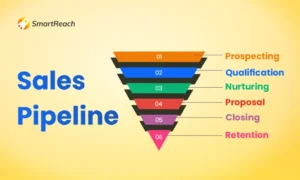
A sales pipeline is a visual representation of where prospects are in the sales process. Building and maintaining a strong pipeline is crucial to ensuring a consistent flow of opportunities. A well-organized pipeline allows you to prioritize leads, forecast revenue, and track the progress of deals at every stage. As part of your strategy, regularly update your pipeline to ensure it’s accurate and reflective of your current opportunities. By keeping your pipeline well-maintained, you’ll have a better idea of which prospects need attention and which are likely to close soon, helping you manage your resources more effectively. Here is a great example of a sales pipeline by SmartReach.
Implement sales tools
Sales tools can help improve your sales process, automate tedious tasks, and improve your team’s overall productivity. These tools may include Customer Relationship Management (CRM) software, email marketing platforms, lead generation tools, analytics, and reporting systems. The right tools will enable your team to better manage prospects, track interactions, and measure performance. When implementing sales tools, ensure that they integrate easily with your strategy and address the specific needs of your sales team. Properly leveraging sales tools can significantly enhance efficiency and accuracy, giving your team more time to focus on high-value activities.
Hire, onboard and train your sales team
Your sales team is critical to the success of your sales strategy, which is why hiring the right people is essential. Look for individuals who not only possess the necessary skills and experience but also fit well with your company culture. Once you’ve hired the right candidates, the next step is onboarding them effectively. A thorough onboarding process ensures that new hires understand your products, services, and sales processes. Ongoing training is equally important, as it keeps your team updated on the latest techniques, tools, and best practices, ensuring they are always performing at their best.
Set sales KPIs and measure performance
Key Performance Indicators (KPIs) are crucial for evaluating the effectiveness of your sales strategy. KPIs help you track progress, identify weaknesses, and ensure that your team is on track to meet its goals. Common KPIs include conversion rates, average deal size, sales cycle length, and revenue per sales rep. By setting clear KPIs and regularly measuring performance, you can make data-driven decisions to refine your strategy and optimize your team’s efforts. Monitoring KPIs also enables you to recognize top performers and provide additional support where needed, ultimately boosting overall sales productivity.
Some examples of key performance indicators (KPIs) for sales reps often include number of leads generated, which tracks how many potential customers the rep identifies, and conversion rate, which measures how many leads are turned into sales. Sales revenue is a vital KPI, reflecting the total value of deals closed, while average deal size shows how successful a rep is at securing larger sales. Sales cycle length tracks how quickly a rep moves leads through the process, and customer retention rate indicates how well the rep maintains relationships with existing clients.
Sales strategy planning
Sales strategy planning involves taking a strategic approach to building out the framework for your sales team’s success. It involves collecting data, setting goals, evaluating current performance, and making adjustments to optimize results. This comprehensive approach allows your sales organization to adapt to changes and continuously improve.
1) Gather sales data and search for trends
Analyzing sales data is essential for understanding past performance and identifying areas for improvement. This data might include sales numbers, conversion rates, lead sources, and sales cycle durations. By evaluating trends within this data, you can make informed decisions about the future direction of your sales efforts. For instance, you might find that certain types of prospects tend to close faster, or that a specific marketing campaign led to a higher conversion rate. Recognizing these patterns will help you tailor your strategy to replicate successful tactics and avoid repeating mistakes.
How to collect sales data
To gather accurate sales data, leverage tools such as your CRM, sales tracking software, and other data analytics platforms. These tools can help collect everything from individual sales rep performance to broader metrics such as revenue growth and market share. Make sure the data you collect is regularly updated to reflect the latest trends and insights, allowing you to make timely adjustments to your strategy.
2) Define your objectives
Clearly defining your objectives is one of the most important aspects of planning a sales strategy. Without well-defined objectives, your team may lack direction or focus. Your sales objectives should align with your overall business goals, whether that’s increasing revenue, improving customer satisfaction, or expanding into new markets. Be specific about what you want to achieve and set measurable targets to track progress along the way.
How to determine sales objectives
Sales objectives should be based on both internal and external factors. Start by evaluating your current sales performance, your target market, and your competition. Your objectives should be ambitious yet attainable, and they should be backed by realistic strategies that will allow you to meet those targets such as the ones discussed earlier in this blog. Break your larger objectives into smaller, more manageable milestones to track progress more easily.
3) Determine metrics for success
Setting the right metrics helps measure the success of your sales strategy. Metrics should be tied to your specific sales objectives and should allow you to track how well you’re performing in critical areas of your sales process.
Sales rep KPIs vs sales manager KPIs
Sales reps typically focus on individual KPIs, such as the number of calls made, deals closed, and sales targets met. Sales managers, on the other hand, track broader team metrics like revenue, team performance, and goal attainment. Understanding the difference between these KPIs ensures that both reps and managers are working toward the same overall objectives, while also providing clarity on their specific roles.
How to identify sales metrics
The sales metrics you track will depend on your business goals. For example, if you’re focusing on lead generation, track metrics like the number of leads generated, conversion rates, and lead quality. Other useful metrics include win rate, deal size, and time to close. By choosing the right metrics, you can gather actionable insights into how your strategy is performing and where improvements are needed.
4) Access current situation
Taking stock of your current sales processes is essential for understanding how well your existing strategy is working. Analyze your current sales pipeline, conversion rates, sales cycle, and team performance. Understanding these factors will give you a baseline from which to build your new sales strategy and help you identify where changes or optimizations are needed.
5) Start sales forecasting
Sales forecasting involves predicting future sales performance based on historical data, current trends, and market conditions. This practice helps you anticipate revenue and plan your resources accordingly. By using forecasting models, you can estimate how many leads you’ll need, what the conversion rates will look like, and how much revenue you can expect to generate in the coming months.
6) Identify selling gaps
Look for opportunities to improve your sales process by identifying gaps in your current approach. These gaps might involve inefficiencies, such as slow response times, or challenges like underqualified leads entering the sales funnel. Understanding these gaps helps you optimize the sales process and increase the chances of closing deals faster.
7) Ideate new initiatives
Once you have identified areas for improvement, brainstorm new initiatives that can help you address these issues. Whether it’s implementing new sales tools, introducing new strategies like inbound marketing, or adopting new technologies, the key is to continually evolve your strategy to stay competitive and meet changing market demands.
8) Involve stakeholders
Involving key stakeholders from various departments—like marketing, product development, and customer service—ensures that your sales strategy aligns with broader company goals. By collaborating with other teams, you can create a more comprehensive sales strategy that takes into account different perspectives, resources, and objectives. This teamwork will lead to a more unified and effective approach to selling.
Sales strategy examples
Looking at sales strategy examples can provide valuable insights into how different organizations approach their sales efforts. Case studies of companies that have successfully executed sales strategies can illustrate what worked, what didn’t, and why. By examining real-world examples, you can gain practical knowledge to apply to your own sales strategy and avoid common pitfalls. Whether it’s how to create a sales strategy for a startup or a large enterprise, seeing how others have approached the process can spark ideas and inspire new tactics for your own team. We have chosen three of the best case study examples to help explain how the learnings from this blog can be applied in the real world.
Case Study 1
Background: A mid-size consumer electronics manufacturer implemented a strategic sales management framework to address declining sales and market share. The organization grappled with a 20% decrease in quarterly sales, inefficiencies in the sales process, and increased competition from new market entrants. Internal challenges included a lack of cohesive sales strategy and outdated CRM systems, while externally, the company faced aggressive pricing tactics and shifting consumer preferences. The primary objective was to develop and deploy a comprehensive Sales Management strategy to enhance sales performance, optimize processes, and regain market share.
Case Study 2
Background: A leading travel company implemented a strategic Sales & Operations Planning (S&OP) framework to optimize its operations. The organization faced a 25% decline in customer satisfaction due to misaligned demand forecasting, along with a 15% increase in operational costs caused by inventory mismanagement and last-minute scheduling changes. Additionally, external market volatility and fluctuating travel demand further strained their planning processes. The primary objective was to establish a cohesive S&OP strategy to enhance demand visibility, improve operations, and improve service delivery.
Case Study 3
Background: A regional chain of hobby, book, and music stores sought to implement an Artificial Intelligence strategy within a comprehensive framework to address declining sales and operational inefficiencies. The organization faced a 15% year-over-year decrease in sales, challenges in inventory management, and lagging customer engagement in an increasingly digital marketplace. Internally, the company struggled with data fragmentation and a lack of AI expertise, which hindered its ability to leverage advanced technologies. Externally, competitive pressures and evolving consumer preferences further exacerbated their challenges. The primary objective was to develop and implement an AI strategy to optimize operational performance and enhance customer experience.
Sales strategy templates
Sales strategy templates can help businesses structure their sales plans effectively and ensure that every aspect of the sales process is covered. Whether you’re creating a strategy from scratch or refining an existing one, using a template can provide guidance and ensure consistency. Below are three templates that can help you organize your sales strategy.
Template 1
For companies just starting out and looking to ensure they have every element of a sales plan covered this sales plan by Zapier is a great option. It covers high-level objectives, target market information as well as chosen strategies and tactics to make sure you and your team have a solid roadmap. The document also covers timelines, budgets and roles to ensure you have an effective means to achieve these objectives. Finally, it covers KPIs, potential challenges and needs to help measure your success as well as predict any difficulties you may encounter.
Template 2
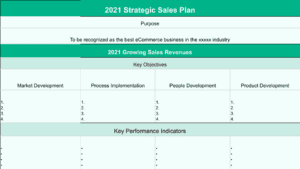
This template is designed for businesses looking to implement an inbound sales strategy. It focuses on creating a purpose statement to serve as a north star. Then growing sales revenue through four main channels, market development, process development, people development and product development. The template includes sections to define your key performance indicators (KPIs) to measure success accurately. This template by Aircall Is a fantastic option for businesses of all sizes.
Template 3
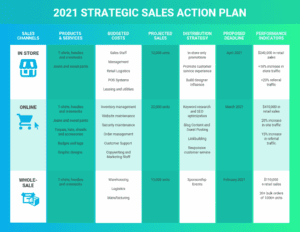
Finally, this template by Venngage is a more advanced template that covers everything in the previous two templates but also factories in the different mediums that a business will be selling to customers. This wide-ranging template is suitable for most businesses and is a great starting point for a larger business seeking to bolster its sales strategy.
Proven sales strategies that drive results
Proven sales strategies are those that have been tested and refined over time and consistently deliver results. While every business is unique, certain strategies are universal and can be applied across industries to improve performance. The key to success is finding the right mix of strategies that align with your company’s goals, resources, and customer base.
Research and qualify prospects
Effective sales strategies begin with proper prospecting. Researching your prospects thoroughly ensures that you’re targeting individuals or businesses that have a genuine need for your product or service. Use tools like LinkedIn, industry reports, and customer reviews to gather valuable insights. Qualifying prospects—determining whether they have the budget, authority, need, and timeline—ensures you’re focusing your efforts on leads that are most likely to convert.
Prioritize inbound sales calls
Inbound leads are prospects who have shown an interest in your product or service by filling out a form, attending a webinar, or engaging with your content. These leads are typically more engaged and closer to making a buying decision, making them more likely to convert. Prioritizing inbound sales calls allows you to focus on high-quality leads, improving efficiency and boosting your conversion rates.
Embrace cold calling
While cold calling can seem daunting, it remains one of the most effective ways to generate new business. Sales teams should approach cold calling with a focus on consultative selling—offering value to the prospect by understanding their challenges and suggesting solutions. By embracing cold calling with the right attitude and strategy, sales teams can turn cold leads into valuable opportunities.
Leverage social media
Social media platforms like LinkedIn, Twitter, TikTok and Facebook are powerful tools for connecting with prospects and building relationships. Sales teams can use social media to engage with potential customers, share relevant content, and establish their expertise. Social media also allows you to track customer sentiment and gather insights into what your audience cares about, helping you tailor your outreach accordingly.
Pay attention to customer feedback
Customer feedback, whether it’s gathered through surveys, reviews, or direct communication, is invaluable for improving your sales strategy. By understanding customer concerns and needs, you can refine your product or service offering and adjust your sales approach. Responding to feedback also demonstrates that you value customer input, which can enhance loyalty and increase the likelihood of repeat business.
Offer a free trial
Offering a free trial of your product or service allows prospects to experience the value you provide before making a financial commitment. A well-executed free trial strategy can convert skeptical prospects into paying customers by giving them firsthand experience of how your solution can solve their pain points. Ensure that the trial period is long enough to demonstrate the full benefits of your offering and provide the right level of support during the trial.
Provide personalized product demos
Personalized product demos are a great way to show prospects exactly how your product or service will address their specific needs. By customizing the demonstration to the customer’s business or personal requirements, you can make a stronger case for why they should purchase. Providing a tailored demo allows you to highlight the unique value of your offering, increasing the chances of a successful close. This is especially effective if you have a well-trained sales team that has a high success rate once a prospect agrees to a demo.
Nurture existing accounts
Nurturing existing customers is just as important as acquiring new ones. By staying in touch with past customers, offering upsell opportunities, and checking in on their evolving needs, you can build long-lasting relationships that lead to repeat business and referrals. A strong customer success strategy, which includes regular follow-ups and providing ongoing value, can turn one-time buyers into loyal brand advocates.
How to implement your sales strategy
The final step in creating a successful sales strategy is effective implementation. Even the best strategies won’t produce results if they’re not executed properly. To ensure successful sales implementation, it’s essential to break down your plan into actionable steps, monitor progress, and make adjustments as needed. Sales implementation involves putting systems, tools, and processes in place to enable your team to execute the strategy smoothly.
Successful sales implementation requires setting clear expectations, assigning roles and responsibilities, and ensuring that everyone on your sales team is equipped with the resources they need to succeed. Regular training, consistent communication, and data tracking are critical to staying on course. The key to effective implementation is maintaining flexibility—continually assess your strategy’s performance and make data-driven decisions to optimize your approach for maximum impact.
Subscribe to our Newsletter
Related Articles